
How INR Full Form Affects India’s Financial System

The INR full form refers to the Indian Rupee, the official currency of India. It is the currency that drives the country’s economy, helping facilitate both domestic and international trade. If you’re someone who is curious about currency systems or you’re planning to travel to India, understanding the Indian Rupee is essential. Similarly, just as bsms full form plays an important role in its respective field, the Indian Rupee holds a significant place in India’s economic framework.
The Indian Rupee is represented by the symbol ₹, which is globally recognized. Whether you’re buying goods, exchanging money at banks, or tracking your investments, the Indian Rupee plays a vital role. This article will delve into the INR form, its significance, history, and how it impacts both the Indian and global economies, much like the way bsms full form influences its specific domain.
What is the INR Full Form?
INR full form is “Indian Rupee.” It is the currency used by the Republic of India. The symbol for the Indian Rupee is ₹, and it is denoted by the international currency code INR. The Reserve Bank of India (RBI) is the primary authority responsible for issuing the currency notes in India, while coins are minted by the Government of India.
Understanding INR form is crucial for anyone involved in trade, investment, or travel in India. The Indian Rupee plays a critical role in managing the Indian economy and its relationships with other countries.
| Aspect | Details |
|---|---|
| Full Form | Indian Rupee (INR) |
| Currency Symbol | ₹ |
| International Currency Code | INR |
| Issuing Authority | Reserve Bank of India (RBI) |
| Coin Minting Authority | Government of India |
| Role in Economy | Essential for trade, investment, and travel in India; plays a critical role in managing the Indian economy and international relations. |
Fields Related to INR Full Form
Here are some fields related to INR full form (Indian Rupee):
Global Financial Systems:
As India grows in economic power, the INR’s role in global financial markets is becoming more significant, even if it is not as widely traded internationally as other major currencies.
Finance and Economics:
The Indian Rupee plays a vital role in India’s financial system, impacting everything from trade, investment, and currency exchange to inflation and interest rates.
International Trade:
The value of the INR affects India’s imports and exports, influencing foreign trade relations.
Banking and Monetary Policy:
The Reserve Bank of India (RBI) controls the Indian Rupee’s supply and regulates monetary policies related to it.
Currency Exchange:
The INR is traded in foreign exchange markets, and its value against other currencies like the USD and Euro affects India’s economy.
Government and Public Finance:
The INR is used in the government’s fiscal policies, taxation, and public spending programs.
Travel and Tourism:
For travelers, the INR’s exchange rate determines the cost of goods and services in India and influences tourism in the country.
Investment and Stock Market:
The Indian Rupee’s performance affects the stock market, especially for international investors looking to invest in Indian assets.
Currency Security and Counterfeit Prevention:
The Indian Rupee features several security features designed to prevent counterfeiting.
Digital Payments:
With the rise of digital payments, the INR is increasingly used for online transactions, affecting how people handle money in India.
Significance of INR
The INR form has much more significance than just being a currency. It serves as the backbone of the Indian economy, impacting everything from trade and investment to daily transactions. The value of the Indian Rupee can indicate the strength of India’s economy relative to other countries, especially in terms of exports, imports, and foreign investment.
Internationally, the Indian Rupee is primarily used for transactions between India and its neighboring countries, such as Nepal and Bhutan. However, the Indian Rupee is not widely accepted outside of the South Asian region, as it is not considered a globally traded currency like the US Dollar or the Euro.
Denominations of the Indian Rupee
The Indian Rupee comes in various denominations, including both coins and banknotes. The currency is divided into 100 paise, although coins of lower denominations are rarely used due to inflation. The banknotes come in several denominations, such as ₹10, ₹20, ₹50, ₹100, ₹200, ₹500, and ₹2000.
The Reserve Bank of India is responsible for printing these banknotes, and each denomination has specific features to ensure authenticity and security. Key security features include watermarks, security threads, latent images, and micro-text printing.
In recent years, the Reserve Bank of India has introduced plastic currency notes to reduce the environmental impact of paper notes. These polymer notes are designed to be more durable and resistant to wear and tear.
Exchange Rate of INR
The INR full form also extends to the fluctuations of the Indian Rupee’s value in the global market. Like most currencies, the value of the Indian Rupee fluctuates due to various economic factors, including inflation, foreign exchange reserves, trade balances, and interest rates.
India follows a floating exchange rate system, meaning the value of the INR is determined by supply and demand in the market. However, the Reserve Bank of India intervenes in the market when necessary to stabilize the currency.
For example, if India experiences a trade deficit (more imports than exports), it might put downward pressure on the value of the Rupee. On the other hand, if India’s exports are strong, the demand for INR rises, which could strengthen the currency.
INR and Inflation
As with any currency, inflation plays a key role in shaping the value of the Indian Rupee. Over the years, inflation has led to the depreciation of the INR, affecting its purchasing power. This is why it’s essential for the Reserve Bank of India to maintain control over inflation through monetary policies.
Inflation in India is closely monitored by the RBI, and any significant rise or fall in the value of the INR can have a direct impact on the price of goods and services. For instance, a weak INR can make imports more expensive, which might result in higher prices for imported goods.
In the Global Economy
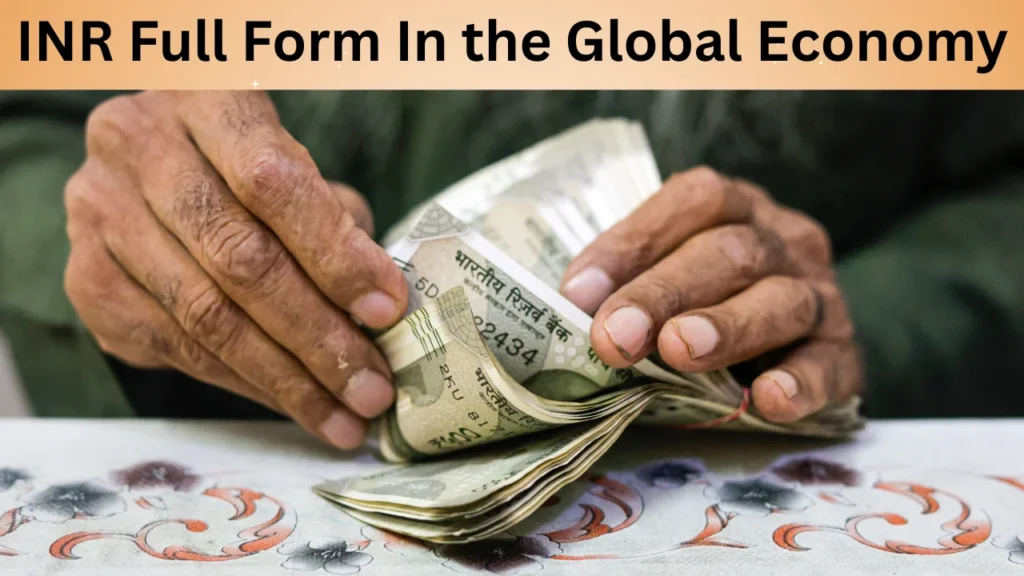
While the INR form refers to the Indian Rupee, it is also a currency that plays a role in international trade. India is one of the world’s largest economies, and the strength of the INR can influence global market trends, particularly in the areas of trade, oil prices, and foreign investment.
The Indian Rupee is especially important in the context of the South Asian region. Neighboring countries such as Nepal and Bhutan accept the INR as a form of payment, which increases the value of the currency beyond India’s borders.
However, the INR is not as widely traded as other global currencies like the USD or Euro. This can make it more volatile in international markets, especially when compared to stable, global currencies. Despite this, India’s growing economy ensures that the INR will remain a key player in the world’s financial systems.
INR Security Features
To protect the Indian Rupee from counterfeiting, the Reserve Bank of India has introduced several security features in its banknotes. These features include watermarks, security threads, microprinting, and optically variable ink, among others. These features make it difficult for counterfeiters to reproduce the notes accurately.
While discussing currency and finance, you might also come across terms like MSVP full form. The full form of MSVP is “Maximum Support Vector Processor,” which is used in the context of machine learning and data processing. It’s unrelated to the Indian Rupee but useful in technical discussions.
How INR Effects Daily Life
For most people, the INR form has a direct impact on their day-to-day lives. Whether you are grocery shopping, paying for services, or saving for the future, the value of the Indian Rupee influences what you can afford.
In recent years, the Indian government has worked to make digital payments more accessible, allowing people to transact using mobile apps, digital wallets, and online banking systems. This has helped improve the flow of money in the Indian economy, while also making it easier for people to manage their finances.
Conclusion
In conclusion, the INR full form refers to the Indian Rupee, a currency that plays a central role in India’s economy. From its rich history to its modern-day importance, the Indian Rupee impacts everything from daily transactions to global trade. Understanding the INR form is vital for anyone engaging with India, whether for business, travel, or investment purposes.
Incorporating the right financial knowledge about INR, along with awareness of its significance, will ensure you make informed decisions in the world of currency exchange and financial markets. Whether you are familiar with the currency or new to it, the Indian Rupee remains a powerful force in the global economy.