DDC Full Form and Educational Systems
Many students search for technical and educational abbreviations every day. Just like people look for the btech full form, many also want to know the ddc full form and its real meaning in different fields. The term DDC is popular in education, technology, libraries, and automation systems. Its meaning changes according to the subject or industry.
In this article, you will learn the ddc full form, its meanings in different sectors, its uses, benefits, and why it is important today. This guide uses simple language so everyone can understand it easily.
What Is the DDC Full Form?
The ddc full form is Dewey Decimal Classification. It is a system used in libraries to organize books according to subjects. Libraries around the world use this method to help readers find books quickly and easily.
Melvil Dewey created this system in 1876. Since then, it has become one of the most widely used library classification systems in the world.
The system divides knowledge into categories and assigns numbers to each subject. These numbers help librarians arrange books in a proper order.
| DDC Full Form | Description | Industry/Field |
|---|---|---|
| Dewey Decimal Classification | A system used to organize books and library materials by subject | Library Science |
| Direct Digital Control | A computerized system used to manage HVAC and building automation | Engineering & Automation |
| District Development Council | A local administrative body that handles development projects | Government Administration |
| Data Distribution Center | A system or center used for storing and distributing data | Information Technology |
| Dynamic Data Capture | A method used to collect and process digital information automatically | Software & Data Management |
Main Categories in the DDC System
The Dewey Decimal Classification system divides knowledge into ten main classes. Each class represents a broad subject area.
How the DDC System Works
The DDC system uses numbers to classify books. Every subject has a unique number. Librarians place books on shelves according to these numbers.
For example:
- Science books usually start with 500
- Mathematics books fall under 510
- Physics books come under 530
This method keeps similar books together. Readers can easily browse related topics in one section.
The decimal system also allows detailed classification. A librarian can add more numbers after the decimal point to describe a topic more clearly.
For example:
| Subject | DDC Number |
|---|---|
| Mathematics | 510 |
| Algebra | 512 |
| Geometry | 516 |
This structure creates a clean and organized library environment.
Importance of the DDC System in Libraries
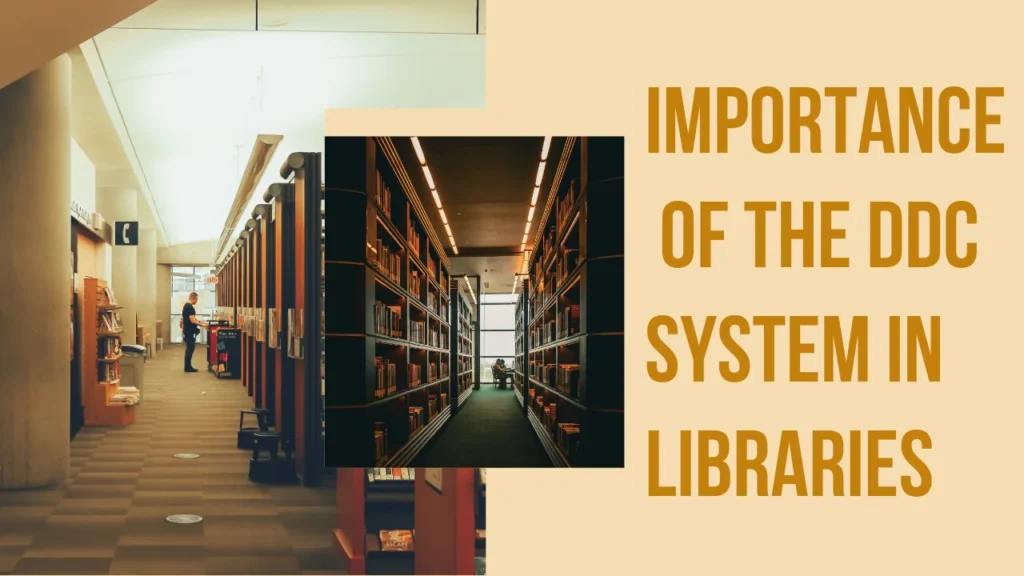
Libraries need proper organization to manage thousands of books. The Dewey Decimal Classification system helps solve this problem.
Here are some important benefits of the DDC system:
- It saves time for readers and librarians.
- It keeps books arranged in a logical order.
- It improves the overall library experience.
- It supports easy catalog management.
- It helps students find related topics quickly.
Because of these benefits, schools, colleges, and public libraries continue to use this system today.
Why Students Should Know About DDC
Students often visit libraries for assignments and research work. Understanding the DDC system helps them locate books faster.
For example, a science student can directly search in the 500 section. A literature student can move to the 800 category.
This knowledge improves research skills and saves valuable study time.
Many competitive exams also include questions about library systems and abbreviations. Learning the ddc full form can therefore help students academically.
Other Meanings of DDC
Although Dewey Decimal Classification is the most common meaning, DDC also has different meanings in other industries.
Direct Digital Control
In engineering and building management, DDC stands for Direct Digital Control. This technology controls heating, ventilation, and air conditioning systems automatically.
Modern buildings use DDC systems to save energy and improve comfort.
Features of Direct Digital Control
| Feature | Description |
|---|---|
| Automatic Monitoring | Tracks building conditions |
| Energy Saving | Reduces power consumption |
| Temperature Control | Maintains room temperature |
| Smart Management | Uses computerized systems |
This technology is common in offices, malls, hospitals, and factories.
District Development Council
In government administration, DDC may also mean District Development Council. These councils work on local development projects and public welfare.
Their responsibilities often include:
- Road development
- Education support
- Public health improvements
- Community planning
This meaning is common in administrative systems.
Difference Between DDC Meanings
Many abbreviations have multiple meanings. The correct meaning depends on the situation and field.
| Field | DDC Meaning |
|---|---|
| Library Science | Dewey Decimal Classification |
| Engineering | Direct Digital Control |
| Government | District Development Council |
Understanding the context helps identify the correct meaning.
How Libraries Arrange Books Using DDC
Libraries follow a structured process while using the DDC system.
First, librarians identify the subject of a book. Then they assign the correct classification number. After that, they place the book in its proper section.
For example:
- History books go into the 900 section.
- Technology books remain in the 600 section.
- Art books stay in the 700 section.
This arrangement creates a smooth learning experience for readers.
Digital Libraries and DDC
Modern technology has changed libraries significantly. Today, many libraries use digital catalogs along with the DDC system.
Students can search books online using classification numbers. This process improves speed and accuracy.
Even digital libraries continue to use the Dewey Decimal Classification method because it remains highly effective.
Advantages of the Dewey Decimal Classification System
The Dewey Decimal Classification system offers several benefits that make it useful worldwide.
Easy Organization
The system organizes books clearly and logically. Readers can understand the arrangement without confusion.
Worldwide Acceptance
Libraries in many countries use this system. Students can therefore use libraries more comfortably while traveling or studying abroad.
Flexible Structure
The decimal format allows librarians to create detailed subject categories.
Better Search Experience
Readers can locate books faster because similar topics stay together.
These advantages explain why the system remains popular even after many years.
Limitations of the DDC System
Although the system is effective, it also has some limitations.
Large Libraries Need More Detail
Huge libraries may require more advanced systems for detailed classification.
Cultural Bias Issues
Some experts believe the system focuses more on Western subjects and ideas.
Continuous Updates Required
New topics and technologies appear regularly. Libraries must update classifications to stay modern.
Despite these challenges, the system still performs well in most educational libraries.
DDC and Modern Education
Education systems continue to evolve with technology. However, libraries still play a major role in learning.
The ddc full form remains important because it supports organized education and research. Schools and colleges continue teaching this concept in library science and information management courses.
Students who understand classification systems often perform research tasks more effectively.
Interesting Facts About DDC
Here are some interesting facts about the Dewey Decimal Classification system:
| Fact | Details |
|---|---|
| Invented In | 1876 |
| Creator | Melvil Dewey |
| Main Classes | 10 |
| Used In | Libraries Worldwide |
| Purpose | Organizing Knowledge |
These facts show how important the system has become over time.
Growth of the DDC System
Technology continues to change how people access information. Yet the Dewey Decimal Classification system remains relevant.
Modern libraries combine traditional classification methods with digital tools. This combination improves efficiency and user experience.
Experts believe that the DDC system will continue evolving to support future educational needs.
Conclusion
The ddc full form is Dewey Decimal Classification, a globally recognized library classification system. It helps organize books into subjects using numbers and categories. This system improves library management and makes searching easier for readers.
DDC also has other meanings like Direct Digital Control and District Development Council. However, Dewey Decimal Classification remains the most common and widely known meaning.
Understanding the ddc full form is useful for students, researchers, librarians, and anyone who uses libraries regularly. The system continues to support education and knowledge management even in the digital age.
By learning how DDC works, students can improve their research skills and find information more efficiently.