ETP Full Form and Its Role in Wastewater Treatment
Understanding technical terms helps you learn how industries protect the environment. One such important term is ETP full form. Many students, workers, and business owners search for this term to understand how industries manage wastewater.
Before we move ahead, you may also want to learn related terms like inr full form, which is commonly used in finance and banking. Now, let us focus on the main topic in detail.
What is ETP Full Form?
The ETP full form is Effluent Treatment Plant. It is a system that treats wastewater produced by industries. This treatment makes water safe before releasing it into rivers or reusing it.
Industries release wastewater that contains chemicals, oils, and harmful substances. If they release this water without treatment, it can damage the environment. An Effluent Treatment Plant helps solve this problem.
| Aspect | Details |
|---|---|
| ETP Full Form | Effluent Treatment Plant |
| Purpose | To remove harmful chemicals and pollutants from wastewater |
| Main Function | Makes water safe for reuse or disposal |
| Common Users | Industries producing chemical or toxic waste |
| Process Involved | Physical, chemical, and biological treatment methods |
| Environmental Role | Prevents contamination of natural water sources |
Why is ETP Important for Industries?
Industries must follow environmental rules to reduce pollution. The ETP full form becomes important because it helps control water pollution.
Reasons for Using ETP
| Reason | Explanation |
|---|---|
| Environmental Protection | It removes harmful chemicals from water |
| Legal Compliance | It helps industries follow government laws |
| Water Reuse | Treated water can be reused in processes |
| Health Safety | It reduces risks to human health |
Without an ETP system, industries may face heavy fines and environmental damage.
How Does an Effluent Treatment Plant Work?
The working of an ETP involves several steps. Each step removes different types of pollutants from wastewater.
1. Preliminary Treatment
In this stage, the system removes large particles like plastic and sand. Workers use screens and filters to clean the water.
2. Primary Treatment
This stage removes suspended solids. The water stays in tanks where heavy particles settle at the bottom.
3. Secondary Treatment
This step uses bacteria to break down organic waste. The process is also known as biological treatment.
4. Tertiary Treatment
This is the final stage. It removes any remaining impurities. The system uses filtration and chemicals to make water safe.
Main Components of an ETP
An Effluent Treatment Plant includes different parts that work together.
| Component | Function |
|---|---|
| Collection Tank | Collects wastewater from industries |
| Equalization Tank | Balances water flow and quality |
| Aeration Tank | Adds oxygen for bacteria growth |
| Clarifier | Separates solid waste from water |
| Sludge Drying Bed | Dries and removes solid waste |
Each component plays an important role in cleaning wastewater effectively.
Types of Effluent Treatment Plants
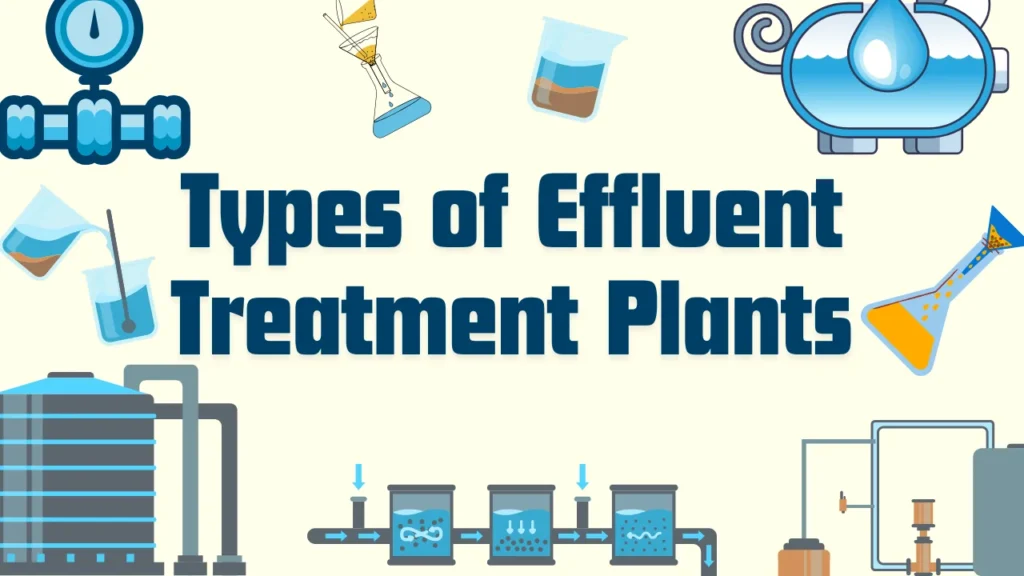
Industries use different types of ETP systems based on their needs.
Chemical ETP
This type uses chemicals to remove pollutants. It is useful for industries that produce toxic waste.
Biological ETP
This system uses microorganisms to break down organic matter. It is common in food and textile industries.
Combined ETP
This type uses both chemical and biological methods. It gives better results and is widely used.
Industries That Use ETP Systems
Many industries depend on ETP systems to treat wastewater.
Common Industries Using ETP
- Textile factories
- Pharmaceutical companies
- Food processing units
- Paper mills
- Oil refineries
These industries produce large amounts of wastewater. They must treat it before releasing it.
Advantages of Using ETP
Using an ETP system offers many benefits for industries and society.
Major Benefits
| Advantage | Details |
|---|---|
| Pollution Control | Reduces harmful waste in water |
| Cost Saving | Allows water reuse in industries |
| Eco-Friendly | Protects nature and aquatic life |
| Compliance | Helps meet environmental laws |
Disadvantages of ETP
Even though ETP systems are useful, they also have some challenges.
Common Limitations
- High installation cost
- Requires regular maintenance
- Needs skilled workers to operate
Industries must manage these challenges to run the system effectively.
Difference Between ETP and STP
People often confuse ETP with STP. Both systems treat water, but they serve different purposes.
| Feature | ETP | STP |
|---|---|---|
| Full Form | Effluent Treatment Plant | Sewage Treatment Plant |
| Usage | Industrial wastewater | Domestic sewage |
| Waste Type | Chemicals and toxins | Organic waste |
| Complexity | More complex | Less complex |
Understanding this difference helps in choosing the right treatment system.
Environmental Effect of ETP
The ETP full form becomes more important when we talk about environmental safety. Clean water is necessary for life.
ETPs help reduce water pollution. They protect rivers, lakes, and oceans. They also prevent harmful chemicals from entering the food chain.
Governments around the world make strict rules for wastewater treatment. Industries must install ETP systems to follow these rules.
Growth of Effluent Treatment Plants
Technology is improving every day. Modern ETP systems use advanced methods like automation and smart monitoring.
Trends
- Use of AI for monitoring
- Energy-efficient treatment systems
- Better sludge management
- Increased water recycling
These improvements will make ETP systems more effective and affordable.
Conclusion
The ETP full form is Effluent Treatment Plant, and it plays a key role in protecting the environment. It helps industries treat wastewater and reduce pollution.
Understanding the ETP full form is important for students, professionals, and business owners. It shows how industries can grow while protecting nature.
A well-managed ETP system ensures clean water, safe living conditions, and a healthier planet for future generations.